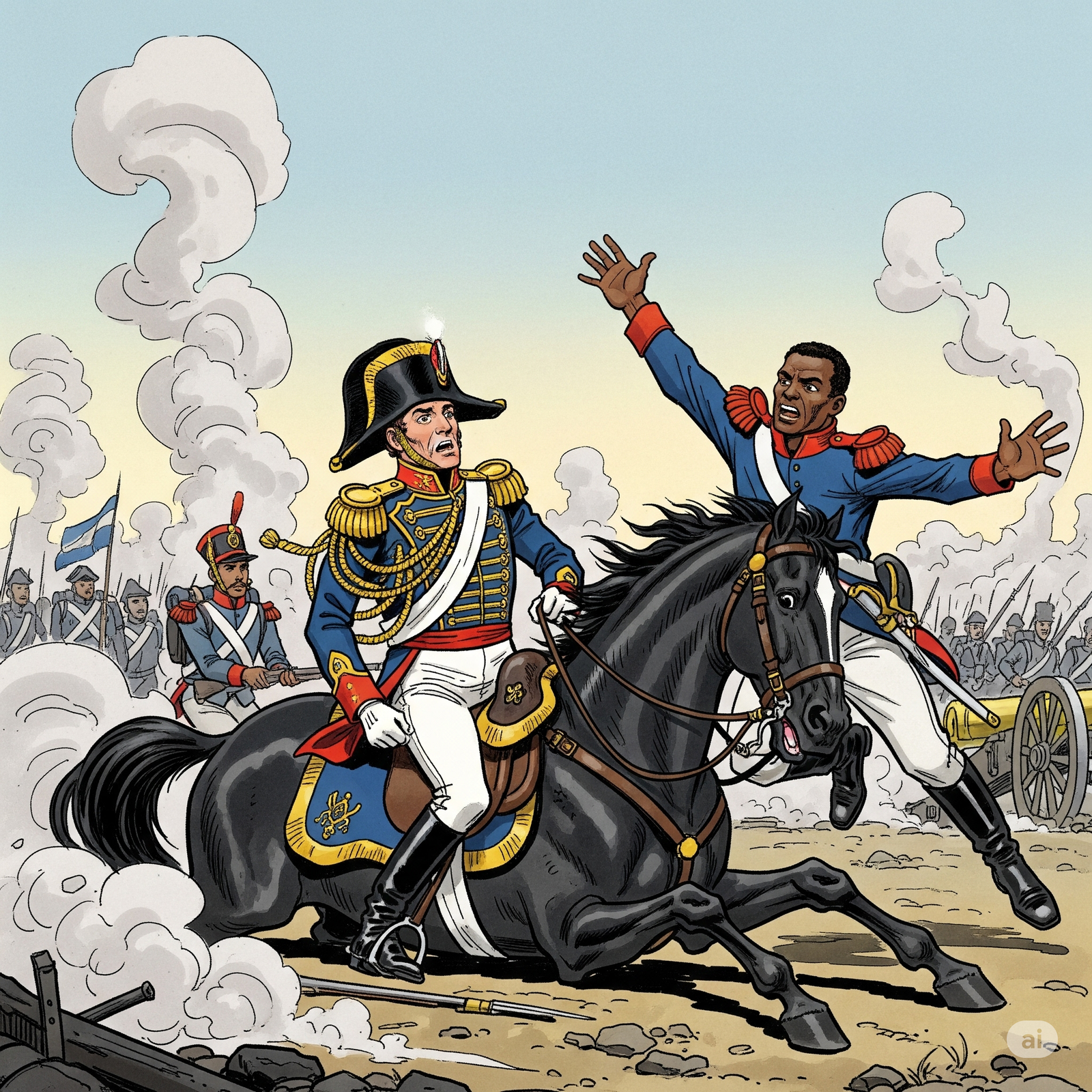
The Battle of San Lorenzo: When History Meets Poetry
 POP Ideas · Educational Resources
The Battle of San Lorenzo: When History Meets Poetry
A free bilingual worksheet and classroom activity pack on Argentina’s most iconic military march.
On February 3, 1813, at the San Carlos Convent, José de San Martín won his first battle on Argentine soil — and lost the grenadier who saved his life, Juan Bautista Cabral. Nearly ninety years later, in 1901, that battle was immortalized in the Marcha de San Lorenzo by composer Cayetano Alberto Silva, a patriotic march still sung today. Everything is right here on the page — read on, or download the printable PDF at the end.
The Story Behind the March
The Battle of San Lorenzo took place on February 3, 1813, at the San Carlos Convent (now San Lorenzo, Santa Fe). It was San Martín’s first military action in Argentina and, despite being a small engagement, it had huge symbolic importance. The famous “Marcha de San Lorenzo” immortalizes this battle and honors Juan Bautista Cabral, the heroic soldier who saved San Martín’s life.
The Poetry in Translation
Here’s the complete march in both Spanish and English. Notice how the translation captures not just the meaning, but the dramatic rhythm and emotional intensity.
| Spanish Original | English Translation |
|---|---|
| Febo asoma, ya sus rayos iluminan el histórico convento. Tras los muros, sordos ruidos, oír se deja de corceles y de acero. |
The sun rises, its rays are illuminating the historical convent. Behind the walls, muffled noises, clattering of horses and steel can be heard. |
| Son las huestes que prepara San Martín para luchar en San Lorenzo. El clarín, estridente sonó y la voz del gran jefe: ¡A la carga! Ordenó. |
It is the army that San Martín is preparing to fight in San Lorenzo. The shrill bugle sounded, and the voice of the great leader: “To the charge!” he ordered. |
| Avanza el enemigo a paso redoblado, al viento desplegado su rojo pabellón. Al viento desplegado su rojo pabellón. |
The enemy advances at a double pace, their red flag unfurled in the wind. Their red flag unfurled in the wind. |
| Y nuestros granaderos, aliados de la gloria, inscriben en la historia su página mejor. Inscriben en la historia su página mejor. |
And our grenadiers, allies of glory, are writing in history their finest page. They are writing in history their finest page. |
| Cabral, soldado heroico, cubriéndose de gloria, cual precio a la victoria, su vida rinde, haciéndose inmortal. |
Cabral, heroic soldier, covered in glory, as the price of victory, gave his life, becoming immortal. |
| Y allí, salvó su arrojo la libertad naciente de medio Continente. ¡Honor, honor al gran Cabral! |
And there, his courage saved the nascent freedom of half a continent. Honor, honor to the great Cabral! |
Notice how “Febo” (Phoebus, the sun god) becomes simply “the sun” — a choice that makes the text more accessible while keeping the poetic dawn imagery.
Key Historical Figures
José de San Martín
The Libertador, architect of South American independence.
Juan Bautista Cabral
The brave grenadier who died saving San Martín.
The Spanish Royalists
The “enemy” with their “red flag unfurled.”
📚 Classroom Activities Pack
Perfect for Spanish/History classes (ages 14–18).
Compare these translation choices and discuss why the translator made each decision:
| Spanish | Literal Translation | Actual Translation | Why this choice? |
|---|---|---|---|
| “Febo asoma” | “Phoebus appears” | “The sun rises” | Students discuss |
| “sordos ruidos” | “deaf noises” | “muffled noises” | Students discuss |
| “corceles” | “steeds/war horses” | “horses” | Students discuss |
| “¡A la carga!” | “To the charge!” | “A LA CARGA!” | Students discuss |
Discussion questions:
- When should translators keep cultural references vs. making them universal?
- How does rhythm affect translation choices in poetry?
Materials needed: map of Argentina, timeline template.
- Locate San Lorenzo on a map of Argentina.
- Create a timeline of San Martín’s campaigns (1813–1824).
- Research and mark other key independence battles.
- Discuss: why was this small battle so important symbolically?
Part A — Vocabulary Deep Dive: find these words in context and explain their meaning:
- Febo (mythological reference)
- huestes vs. ejército (why this word choice?)
- clarín (what instrument is this?)
- pabellón vs. bandera (formal vs. common term)
- arrojo (courage, but what type exactly?)
Part B — Literary Devices: identify and explain:
- Repetition: find the repeated lines — why repeat them?
- Imagery: list all visual and auditory images.
- Rhythm: how does the meter mirror military marching?
- Symbolism: what do colors represent? (red flag, golden sun)
Part C — Cultural Impact: research and answer:
- When was this march written? (1901, by Cayetano Alberto Silva)
- How is it used in modern Argentina?
- What other countries have similar patriotic marches?
- Option A — Bilingual Poem: write your own bilingual poem about a historical moment from your country. Include historical accuracy, poetic devices, and cultural references that might need translation notes.
- Option B — Translation Challenge: take a famous song or poem from your culture and translate it into Spanish, keeping the meaning and emotion, the rhythm (as much as possible), and the cultural context (add explanatory notes).
- Option C — Multimedia Presentation: create a 5-minute presentation combining historical background, a musical performance (find recordings online), a visual timeline, and a translation comparison.
- Cultural Identity: how do national anthems and marches shape a country’s identity? Give examples from different countries.
- Translation Ethics: should historical/patriotic texts be translated literally or adapted for modern audiences? Defend your position.
- Memory and History: how do artistic works like this march influence how we remember historical events? Is this good or problematic?
- Language Learning: how can studying translations of cultural texts help language learners understand not just vocabulary, but values and worldview?
Teacher’s Answer Key & Extension Ideas
- Battle date: February 3, 1813
- March composed: 1901 (88 years later!)
- Composer: Cayetano Alberto Silva
- Historical significance: first patriot victory on Argentine soil
- Casualties: 1 dead (Cabral), 7 wounded (patriots) vs. 40+ (royalists)
- Historical accuracy (25%)
- Language use (25%)
- Cultural understanding (25%)
- Creative presentation (25%)
- Music: analyze the march’s musical structure.
- Art: study paintings of the battle.
- Geography: map San Martín’s liberation campaigns.
- Philosophy: discuss concepts of freedom and independence.
For teachers: this works great as a 17 de agosto (San Martín Day) special lesson, but can be used year-round for translation studies, Argentine history, or cultural analysis units.
¡Viva la Patria! 🇦🇷
Prefer a printable version for the classroom?
Download the PDF



One Comment