Learn Spanish with Cumbia: Decoding “Cuatro Letras” by Antonio Ríos
Welcome back! Today we are exploring a linguistic phenomenon through the lens of Argentine culture. In the world of Cumbia, few names carry as much weight as Antonio Ríos, “El Maestro.” His track “Cuatro Letras” (Four Letters) is a masterclass in emotional directness.
Whether you say it in English (L-O-V-E) or Spanish (A-M-O-R), it only takes four letters to change a life. As a translator and teacher, I find these overlaps are the best “hooks” for memory. But before we get into the grammar, let’s put your ears to the test.
Step 1: Listening Practice (Interactive Video)
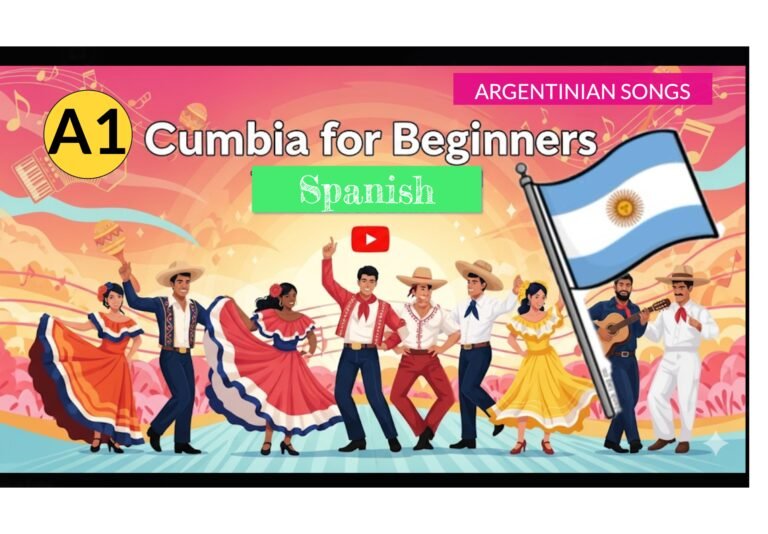
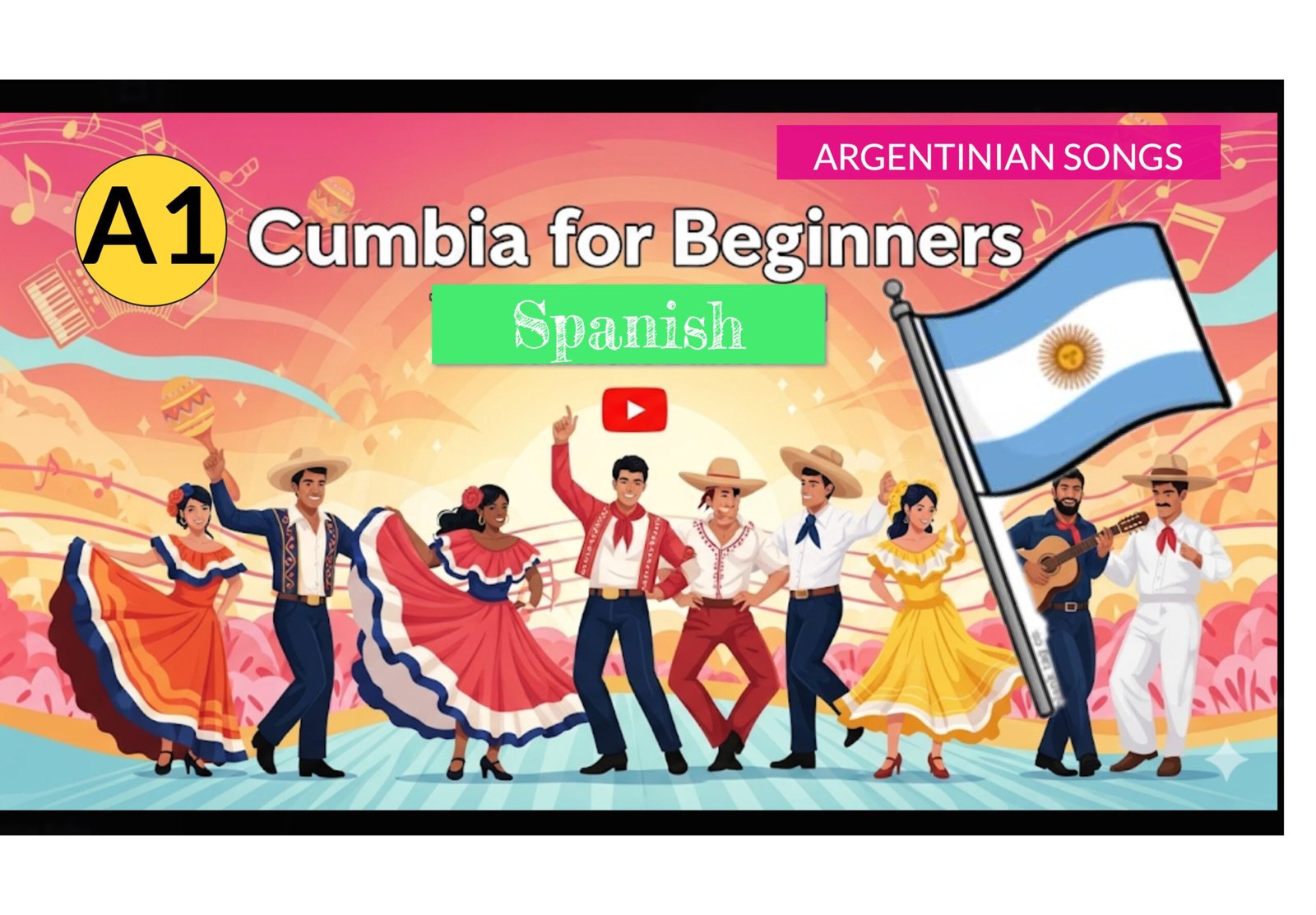
I have created a specific video exercise to help you sharpen your Spanish listening skills. Cumbia is perfect for this because the rhythm provides a steady beat for the lyrics. Watch the video below and try to catch the phrases as they appear!
Step 2: Interactive Lyrics Challenge
Now that you’ve watched the video, try to fill in the missing lyrics in this exercise. This will help you cement the vocabulary we are about to analyze.
Step 3: The Teacher’s Analysis (Say vs. Tell)
In the lyrics, Antonio sings: “Yo pedí que tú me digas…” (I asked you to tell me). This highlights a common confusion for English speakers: the difference between Say, Tell, and Call in Spanish.
While English strictly separates “saying something” and “telling someone,” Spanish often uses the verb decir for both. However, the nuance is in the pronouns. When he says “decírmelo” (tell it to me), he is attaching the object pronouns directly to the verb. In my experience as a translator, mastering these “attachments” is the secret to moving from intermediate to advanced Spanish.
Cultural Insight: Passion in 90s Argentina
This song is a product of 90s Argentina. It teaches a valuable cultural lesson: in Argentina, passion is often expressed with raw sincerity and rhythmic simplicity. The phrase “Tengo herido el corazón” is a beautiful example. While we might simply say “I’m heartbroken,” the Spanish structure literally says “I have the heart wounded,” emphasizing the state of the organ itself as a result of the betrayal.
| Spanish Lyrics | Literal Translation | Key Linguistic Analysis |
|---|---|---|
| Cuatro letras nada más | Just four letters | PRAGMATICS: “Nada más” is used to show that despite the complexity of the breakup, the solution was just one simple word. |
| Pero tú me despreciaste | But you scorned me | VOCABULARY: “Despreciar” is stronger than “to dislike”; it implies a total lack of respect for the other person’s value. |
| Vete pronto por favor | Please leave soon | IMPERATIVE: A polite but firm command. In Spanish, adding “por favor” to a command like “vete” is common in dramatic songs. |
Pro-Tip: Notice the use of “daba” in “yo te daba mi vida”. This is the imperfect tense. It shows that his love wasn’t just a one-time event; it was a continuous state of being—until she “exchanged” him (me cambiaste) for someone else.
Support the Project & Keep Learning!
If you found this analysis helpful, you can support my work and access exclusive, ad-free PDF guides for your Spanish journey:
Follow me on social media for daily tips: