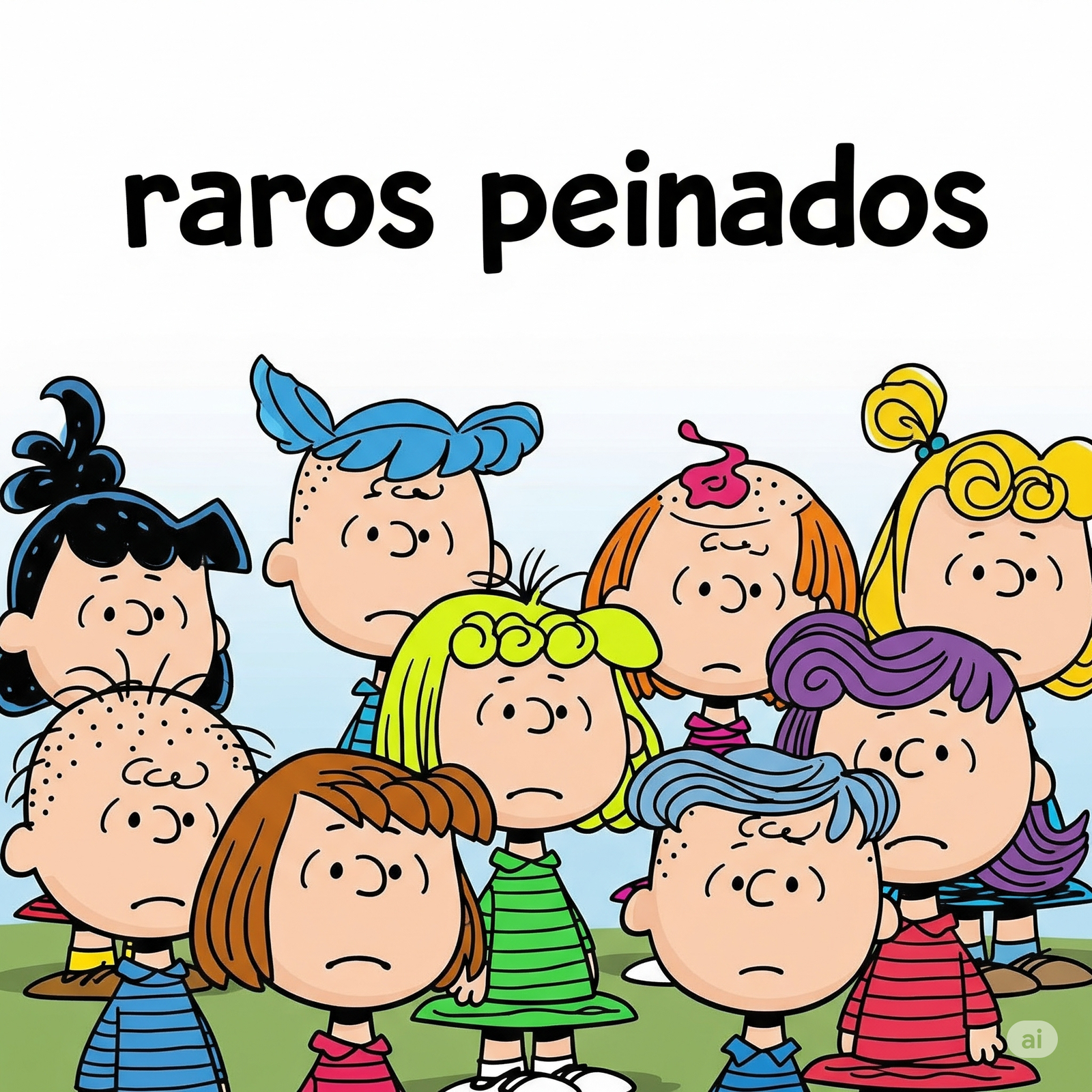
Decoding “Raros Peinados Nuevos”by Charly García
 POP Ideas · Music & Language
Decoding “Raros Peinados Nuevos” by Charly García
A line-by-line analysis of Charly García’s manifesto on authenticity, creative resistance, and the rejection of conformity.
Charly García’s “Raros Peinados Nuevos” (“Weird New Hairstyles”) is one of the pillars of Spanish rock. Through its lyrics, we unravel a manifesto about authenticity, creative resistance, and the rejection of conformity — phrase by phrase.
Right and Left: A Political Statement
Y si vas a la derecha y cambiás hacia la izquierda, adelante
And if you go right and switch to left, go ahead
Far from being a simple directional instruction, this is a political statement. Written in a period after the dictatorship in Argentina, a time of transitions and political redefinitions, Charly García’s lyrics celebrate movement and change. “Going right and switching to left” is not a critique of inconsistency, but an affirmation of the freedom of thought and ideological evolution. What matters is not a fixed direction, but the courage to take a stand and, if necessary, change it — a call to action and constant reflection, unlike apathy.
Standing Still vs. Taking a Stand
Es mejor que estarse quieto, es mejor que ser un vigilante
It’s better than standing still, it’s better than being a watchman
This line reaffirms the first statement. “Standing still” and “being a watchman” are metaphors for political inaction and passivity. Charly García suggests it is preferable to make mistakes, to go “right and switch to left,” than to have no position at all — echoing the idea that “God vomits out the lukewarm,” those who are neither hot nor cold. For the artist, neutrality or lack of commitment is the true fault. What is valued is conviction, taking a stand, even if it evolves over time.
Love Songs and Weird New Hairstyles
Si me gustan las canciones de amor / Y me gustan esos raros peinados nuevos
If I like love songs / And I like those weird new hairstyles
With these lines, Charly García camouflages the political message behind an apparent simplicity. By including “love songs,” he seems to minimize the seriousness of his stance, making it accessible and personal. But the real statement is hidden in the “weird new hairstyles.” Hair has historically been a medium for protest: shaving one’s head, painting it with strange colors, or simply adopting an unconventional style has been a way of defying social norms and expressing an identity that rebels against impositions. The song speaks not only of political freedom but also of the personal freedom to be and express oneself without fear of judgment.
From Critic to Nurse
Ya no quiero criticar / Solo quiero ser un enfermero
I don’t want to criticize anymore / I just want to be a nurse
Here, Charly García distances himself from the acidic critique that characterized much of protest rock. He understands the difficulty and cost of having a political position, especially in an era where many died for their ideals. By declaring that he “just wants to be a nurse,” he adopts the role of a healer: his goal is no longer to point out others’ mistakes but to heal the wounds of a society that has suffered. Being a “nurse” implies caring for, encouraging, and reminding people that they should not give up on their ideals and values, even when life seems adverse — a call to preserve personal essence and dreams, because a life without them is not worth living.
Working for Nothing, Singing to the Moon
Y si trabajás al pedo y estás haciendo algo nuevo, adelante / Y si cantás a la luna y perdés la vida en un instante
And if you work for nothing and you’re doing something new, go ahead / And if you sing to the moon and lose your life in an instant
These lines encapsulate the essence of the artist and, at the same time, creative audacity. “Trabajás al pedo” (working for nothing) resonates deeply with those of us who dedicate ourselves to projects that society might consider useless or meaningless — I confess this part hits very close to home for me. But Charly García precisely celebrates that work: the effort that doesn’t seek immediate benefit or external validation, but is born from a genuine passion. “Singing to the moon” represents the purest and most selfless expression of art, one that doesn’t need an audience or a pragmatic purpose. “Losing your life in an instant” here is not a tragedy, but the culmination of an act of complete authenticity — total dedication to one’s calling, regardless of the consequences, because passion is what truly matters.
A Challenge to the Idealists
Si luchaste por un mundo mejor / Y te gustan esos raros peinados nuevos
If you fought for a better world / And you like those weird new hairstyles
Here Charly García addresses those with a past of social and political commitment. The song recognizes and validates those who “fought for a better world,” but it throws a challenge at them: do they maintain their authenticity in the present? The true fight doesn’t end with the battle — it continues in daily life. “Those weird new hairstyles” works as a bridge between the heroic past and the current identity: a call for conviction not to be hidden, but displayed with pride, regardless of the passage of time.
The Doctor vs. the Nurse
No quiero ver al doctor / Solo quiero ver al enfermero
I don’t want to see the doctor / I just want to see the nurse
In this dichotomy, Charly García criticizes the figure of the “doctor” as a representation of authority that diagnoses, dictates, and prescribes solutions from a position of power and distance — those leaders or intellectuals who claim to have the absolute truth about how society should function, without getting their hands dirty. The “nurse,” in contrast, is on the front line of action: dedicated to healing and relieving pain directly and personally, without pretensions of giving lessons. Charly García expresses his desire to be a force of tangible help, not a distant theorist.
A Little Love, Some Reason
Dame un poquito de amor, no quiero un toco / Quiero algo de razón, no quiero un loco
Give me a little love, I don’t want a ton / I want some reason, I don’t want a crazy person
This phrase is a plea for balance and humanity. Charly García rejects extremes: blind devotion or senseless fanaticism. What he seeks is a middle ground — a little love, and some reason. It’s a direct message to those with different opinions, asking not for complete acceptance, but a minimum of empathy: a valid argument to discuss, and a gesture of humanity that recognizes him as a person, even if we think differently. It’s an invitation to find common ground of respect in a polarized world.
Turn Off the TV
Apagá el televisor / Si lo que te gusta es gritar, desenchufá el cable del parlante
Turn off the TV / If you like to scream, unplug the speaker cable
In an act of peaceful radicalism, Charly García invites total disconnection. The television and speaker symbolize the mass media, social networks, and any platform that generates noise and polarization. The proposed solution is not to participate in the debate, but to withdraw from it — acts of personal resistance. True freedom begins when one stops being a passive receiver of information and regains control of their own voice and criteria.
Silence Has Action
El silencio tiene acción, el más cuerdo es el más delirante
Silence has action, the sanest is the craziest
“Silence has action” contradicts the notion that only loud words or protest are effective. Refraining from participating in the media’s “shouting” and polarization can be a powerful form of resistance — a conscious act of not validating a system that feeds on confrontation. “The sanest is the craziest” completely inverts the traditional notion of sanity: the “sane” person is the one who has suffered the injustices of the system to the point of appearing “delirious” in the eyes of society, while those whom society considers “sane” are those who passively accept an unjust system. The song celebrates those who dare to seem crazy by clinging to their humanity and authenticity.
From Aviator to Nurse
De chiquito fui aviador / Pero ahora soy un enfermero
When I was little, I was an aviator / But now I’m a nurse
This is the conclusion of Charly García’s symbolic journey. The “aviator” is a metaphor for someone who observes the world from above — from a position of distance and perspective, able to criticize and judge without being directly involved in the chaos of daily life. The “nurse,” by contrast, does not observe; they are on the battlefield, with the people, healing wounds directly. With this closing line, Charly affirms his decision to leave distant criticism behind and commit to direct action and empathy: a change of perspective from theory to practice, from observation to participation, and from criticism to help.






One Comment